
Demolition
Garages, barns, old camps, foundations and concrete. We take it down, haul it out on our own trucks and leave the ground level.
Structures, concrete and everything underneath
Most demolition we do is residential or light commercial. A building that has stopped earning its keep, a slab that cracked years ago, or a lot that needs clearing before anything new can go on it.
- Detached garages and sheds
- Pole barns and outbuildings
- Old houses and camps
- Mobile homes
- Decks, porches and additions
- Fire-damaged structures
- Driveways, slabs and sidewalks
- Foundations and basement walls
- Abandoned septic tanks
- Interior tear-outs before a remodel
If you are not sure whether the thing you want gone counts, call and describe it.
Three things that have to happen first
None of these are quick, and all of them are easier to start early than to rush at the end.
Utilities off
Power, gas and water all have to be disconnected at the source, not just shut off inside. The utility company schedules that, and their calendar is not ours.
Permits
Most townships require a demolition permit, and depending on the building the county may want one too. We will tell you what your address needs.
Asbestos survey
Older buildings often need an asbestos inspection before they can legally come down. The rules depend on the building and who owns it. We will tell you where you stand before you are committed to anything.
How the job runs
- We look at it. How close it sits to things you are keeping, what is attached to it, and where the trucks can get in.
- Disconnects and paperwork. Utilities scheduled, permit pulled, any inspection done.
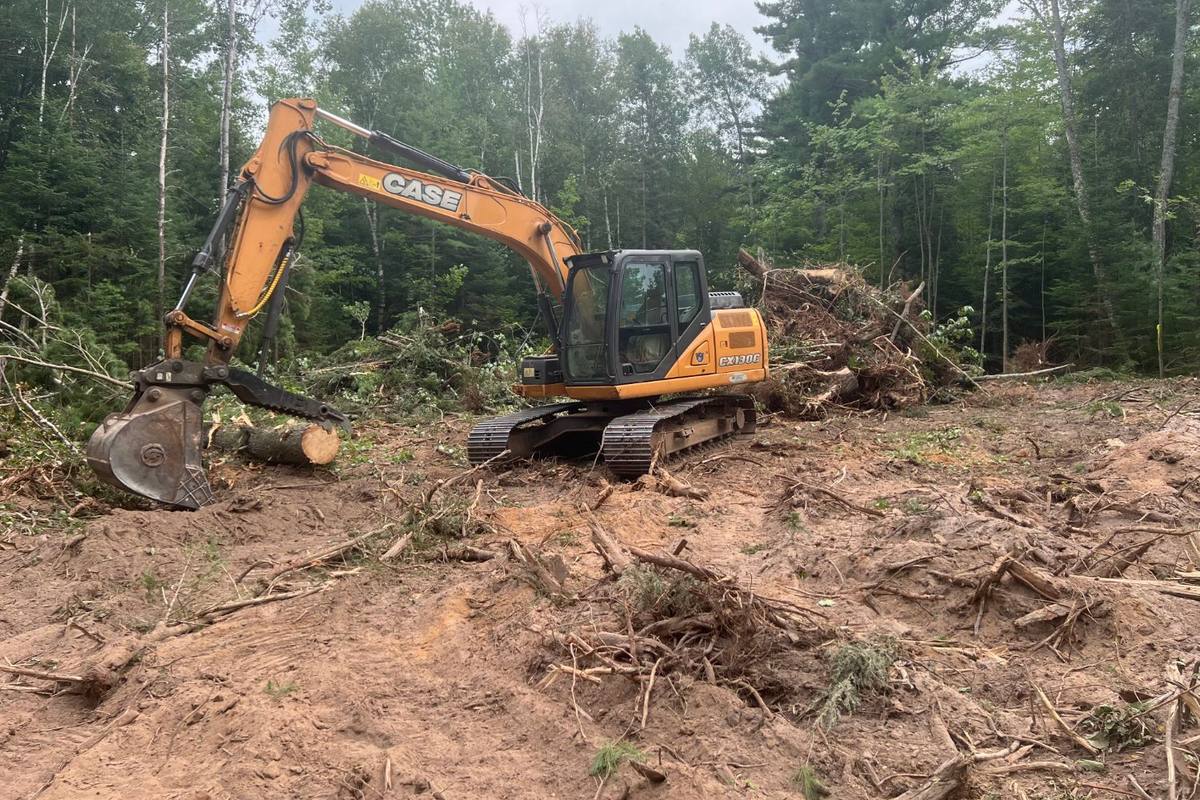
- Down it comes. Usually an excavator with a thumb, pulling the structure in on itself so the pile lands where we want it.
- Haul-out. Our trucks, running as we go, so the debris is not sitting in your yard for two weeks.
- Backfill and grade. The hole gets filled and compacted and the ground left level.
Where the money goes
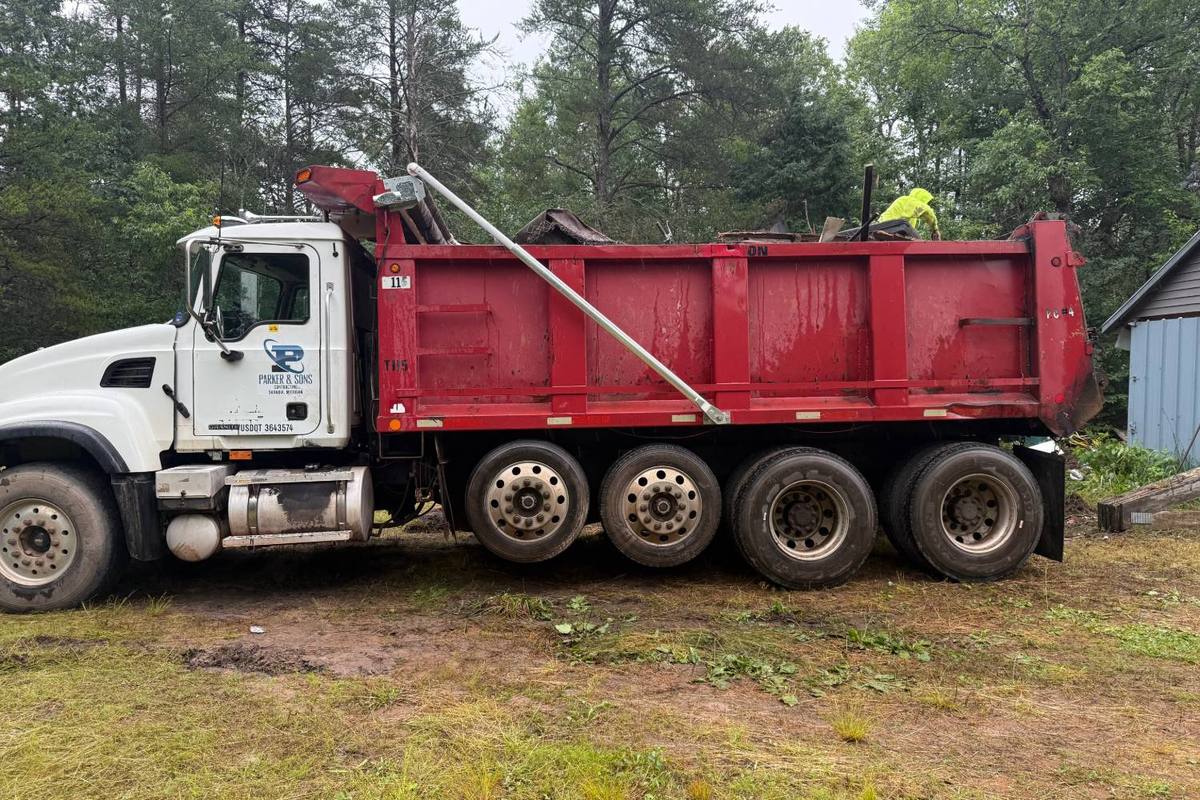
Knocking a building down is the fast part. Most of a demolition bill is hauling and tipping fees at the landfill. We run our own dump trucks, so nobody is marking that up on the way through, and you are not waiting on another outfit to come and get the pile.
Demolition questions
What does demolition cost?
It comes down to size, what the building is made of, how close it sits to things you want left standing, and how far the debris has to travel. A one-car garage on an open lot and a farmhouse twenty feet off the property line are not the same job. We look at it and put a number in writing.
Do you take the foundation out too?
Usually, and we would recommend it. A foundation left in the ground limits what you can put there later, and it keeps settling for years. Pulling it while the machine is already on site costs far less than coming back for it.
Can you take down part of a building?
Yes. Removing an addition, a porch or a fire-damaged wing while the rest stays up is routine, and so is gutting an interior before a remodel. It is slower per square foot than flattening the whole thing, so it is worth being clear about what stays.
How long does it take?
Once we are on site, a garage is often a day and a house is a few. The waiting is almost always in front of that: utility disconnects and permits set the start date more than the work does.
What is left when you finish?
Filled, compacted and graded level. If you are planning to seed it, say so and we will finish with topsoil instead of leaving fill on top.