
Driveway excavating & installation
New gravel driveways, rebuilds, culverts and ditching, and base prep for paving — built to survive a Marquette County spring.
Most driveways fail for the same reason
Water had nowhere to go. It sits in the base, freezes, lifts, and by the second or third spring you're driving through ruts and soft spots.
So we build the base to drain before any gravel goes on it. Crown it, ditch both sides, put a culvert in where the water crosses. Built that way a driveway wants a touch-up grade every few years instead of a rebuild.
- New driveways, from the road to the garage door
- Rebuilding driveways that have gone soft or rutted
- Culvert installation and replacement at the road approach
- Ditching and shaping so meltwater leaves the driveway
- Widening, turnarounds and extra parking
- Grading and base prep for an asphalt contractor
- Private roads and shared drives to camps and back lots
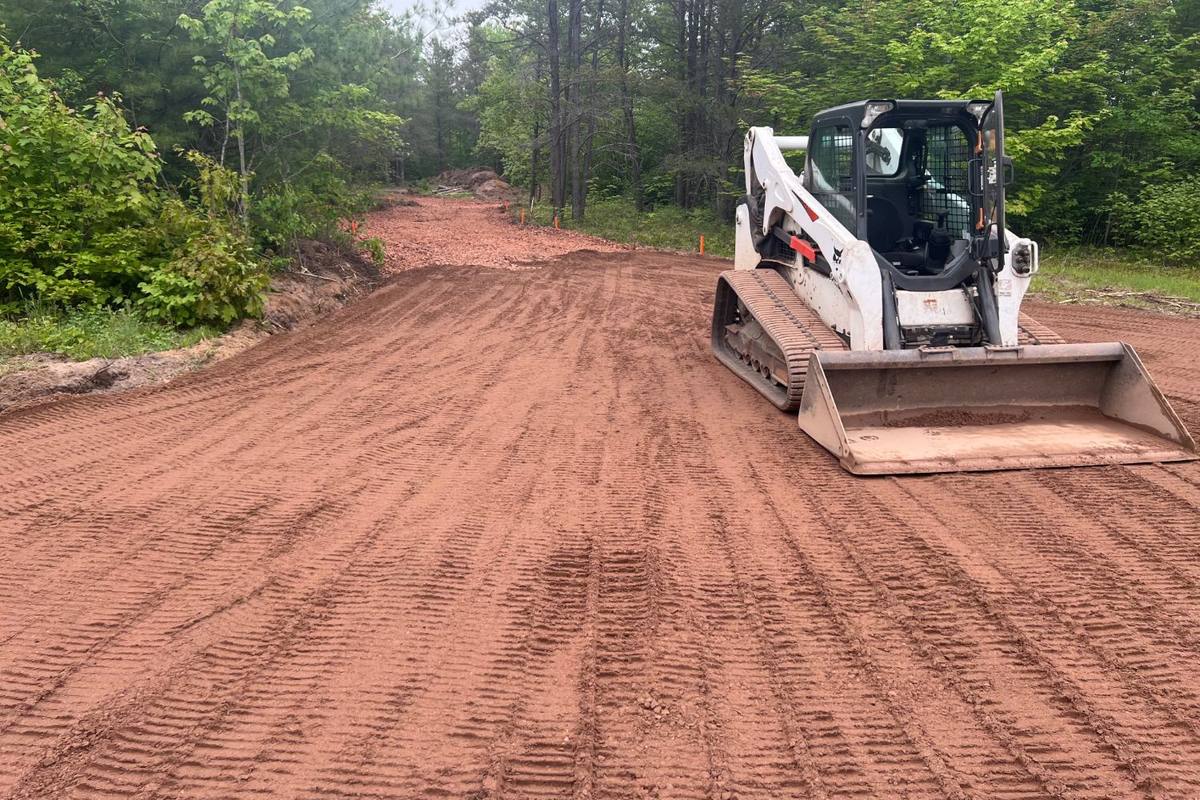
What goes into a driveway that lasts
The layers nobody sees are the ones that decide how it holds up.
-
Strip and shape
Topsoil and organic material come out — they hold water and never stop settling. Then the subgrade gets shaped so water runs off, not in.
-
Drainage first
Ditches, culvert and crown. If the water has a path, the base stays dry and the frost can't lift it.
-
Base material
Pit run or crushed base, placed at a depth that matches the soil and how you'll use it. Delivery weight matters — a driveway for a camper and boat isn't built like one for a car.
-
Surface and grade
Crushed gravel on top, graded and compacted, ready to use — or left at the right elevation if a paving contractor is coming behind us.
Signs your driveway needs more than another load of gravel
- Ruts that come back every spring no matter how often it's graded
- Standing water or a soft spot that never fully dries out
- Gravel disappearing into the ground instead of staying on top
- A crushed or plugged culvert at the road
- Washouts along the edges after heavy rain or melt
- The plow truck catching edges that used to be smooth
If that sounds like yours, adding gravel is money spent on a symptom. We'll tell you which one you have — a regrade or a rebuild — and what each one costs.
Driveway questions we get a lot
Do I need a permit for a new driveway?
If you're putting in a new approach onto a county road, you generally need a driveway permit from the road commission, and there may be township requirements as well. We'll walk you through what applies to your address before anything starts.
Gravel or paved — which should I do?
Gravel costs less up front, handles frost movement better and is easy to repair. Pavement is cleaner and easier to plow, but it needs a properly built base or it cracks. Either way the base work is the same, so it's worth doing right once.
How long does a driveway take?
Most residential driveways are a one- to three-day job once we're on site, depending on length, how much material has to come in and whether a culvert is involved.
Can you fix just the bad section?
Often, yes. If the rest of the base is sound there's no reason to redo the whole thing. We'll say so — we'd rather do the smaller job than sell you one you don't need.
Tell us what you need done
Call the office and talk to someone who has been on a job site, or send the details and we'll get back to you with a written estimate. No charge for the estimate.